
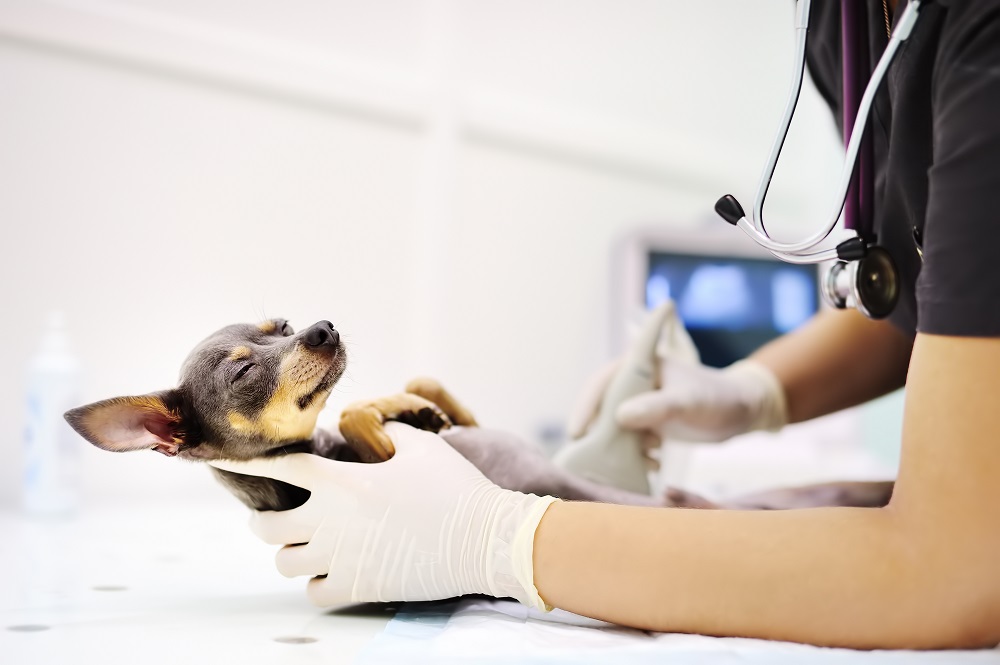
At Big Tujunga Veterinary Hospital, we offer ultrasound imaging to help diagnose and monitor a variety of medical conditions in dogs and cats. Ultrasound is a safe, noninvasive diagnostic tool that uses sound waves to create images of internal organs and soft tissues.
This technology allows our veterinary team to examine areas of your pet’s body that may not be clearly visible through a physical examination or traditional X-rays, helping us make informed decisions about their medical care.
What Is a Veterinary Ultrasound?
Ultrasound imaging uses high-frequency sound waves to create real-time images of internal structures. Unlike X-rays, ultrasound does not use ionizing radiation.
During the examination, a small handheld device called a transducer is gently moved over the area being evaluated. A special gel is applied to help produce clear images.
Most ultrasound examinations are well tolerated by pets, although some may require mild sedation depending on their condition or comfort level.
What Can an Ultrasound Detect?
Veterinary ultrasound can help evaluate a wide range of internal organs and medical concerns, including:
- Liver and Gallbladder: Evaluating changes in organ size, structure, or appearance.
- Kidneys and Bladder: Identifying certain urinary tract abnormalities, stones, or masses.
- Stomach and Intestines: Investigating digestive problems, abnormal thickening, or suspected obstructions.
- Spleen: Assessing enlargement, masses, or other abnormalities.
- Reproductive Organs: Evaluating certain reproductive conditions and pregnancy when appropriate.
- Abdominal Masses: Helping identify and assess abnormal growths or fluid accumulation.
When Might Your Pet Need an Ultrasound?
Our veterinary team may recommend an ultrasound when additional diagnostic information is needed to investigate symptoms or monitor an existing condition.
Common reasons include:
- Persistent vomiting or diarrhea.
- Unexplained weight loss.
- Abdominal pain or swelling.
- Changes in urination.
- Abnormal blood test results.
- Suspected internal masses or organ abnormalities.
- Monitoring certain chronic medical conditions.
Benefits of Veterinary Ultrasound
Ultrasound is a valuable diagnostic tool because it allows veterinarians to examine internal organs in real time without surgery or exposure to ionizing radiation.
It can also help guide certain diagnostic procedures, such as collecting fluid samples or obtaining tissue samples when medically appropriate.
While ultrasound provides important information, additional diagnostic testing may sometimes be necessary to confirm a diagnosis.
Schedule an Ultrasound Appointment
At Big Tujunga Veterinary Hospital, our goal is to identify health concerns as accurately and efficiently as possible so we can recommend appropriate treatment for your pet.
If your pet is experiencing unexplained symptoms or requires additional diagnostic imaging, contact us at (818) 352-6085 to schedule an evaluation and learn more about our ultrasound services.